
Plan Your Visit
Everything you need to know before you arrive — the rules that keep these sites enjoyable, how to camp safely around wildlife, why we check firewood, and answers to the questions we hear most
Rules of Use
Our rules exist for one reason: to protect the forest and the experience of everyone camping in it. They follow Forest Service regulations (36 CFR Part 261) and apply at every site we operate. Our staff lead with education most issues are solved with a friendly conversation — but serious or repeated violations are referred to Forest Service law enforcement.
Check-in 3 PM
Check-out 12 PM
Quiet hours 10 PM–6 AM
8 people / site
2 vehicles / site
14-day max stay
Camping
✦ Camp only in designated campsites; park fully on your site's parking pad. Extra vehicles use overflow parking where provided.
✦ Maximum 8 people and 2 vehicles per single campsite unless otherwise posted. Maximum stay is 14 days in any 30-day period.
✦ Check-in 3:00 PM, check-out 12:00 PM. All fees must be paid before occupying a site; display proof of payment where required.
✦ Quiet hours are 10:00 PM to 6:00 AM. No generators, amplified music, or audio devices audible beyond your campsite at any time. Exterior string lights and decorative lighting off during quiet hours.
✦ Campground speed limit is 10 MPH. Stay on roads and parking pads — driving around barriers or off established routes damages the forest and will be documented.
✦ Fires only in the fire rings and grills provided, attended at all times, and fully out — drowned with water — before you leave or sleep. Fire restrictions are strictly enforced. Collecting firewood or vegetation is prohibited.
✦ Gray water and black water go in dump stations or toilets only — never on the ground. No dishwashing, tooth-brushing, or bathing at water spigots.
✦ Pets on leash at all times, never left unattended, waste picked up immediately.
✦ Leave your site clean. Don't cut, carve, nail into, or tie anything to trees; don't remove rocks, plants, or wood.
Camping
✦ Open posted hours only — no overnight parking, camping, or sleeping in vehicles.
✦ Pay day-use fees on arrival. Park only in designated spaces; never block gates, traffic, or emergency access.
✦ Excessive noise and amplified music are prohibited. Pack out trash or use the receptacles provided.
✦ Fireworks, firearms discharge, and feeding wildlife are prohibited everywhere.
Wildlife & Safety
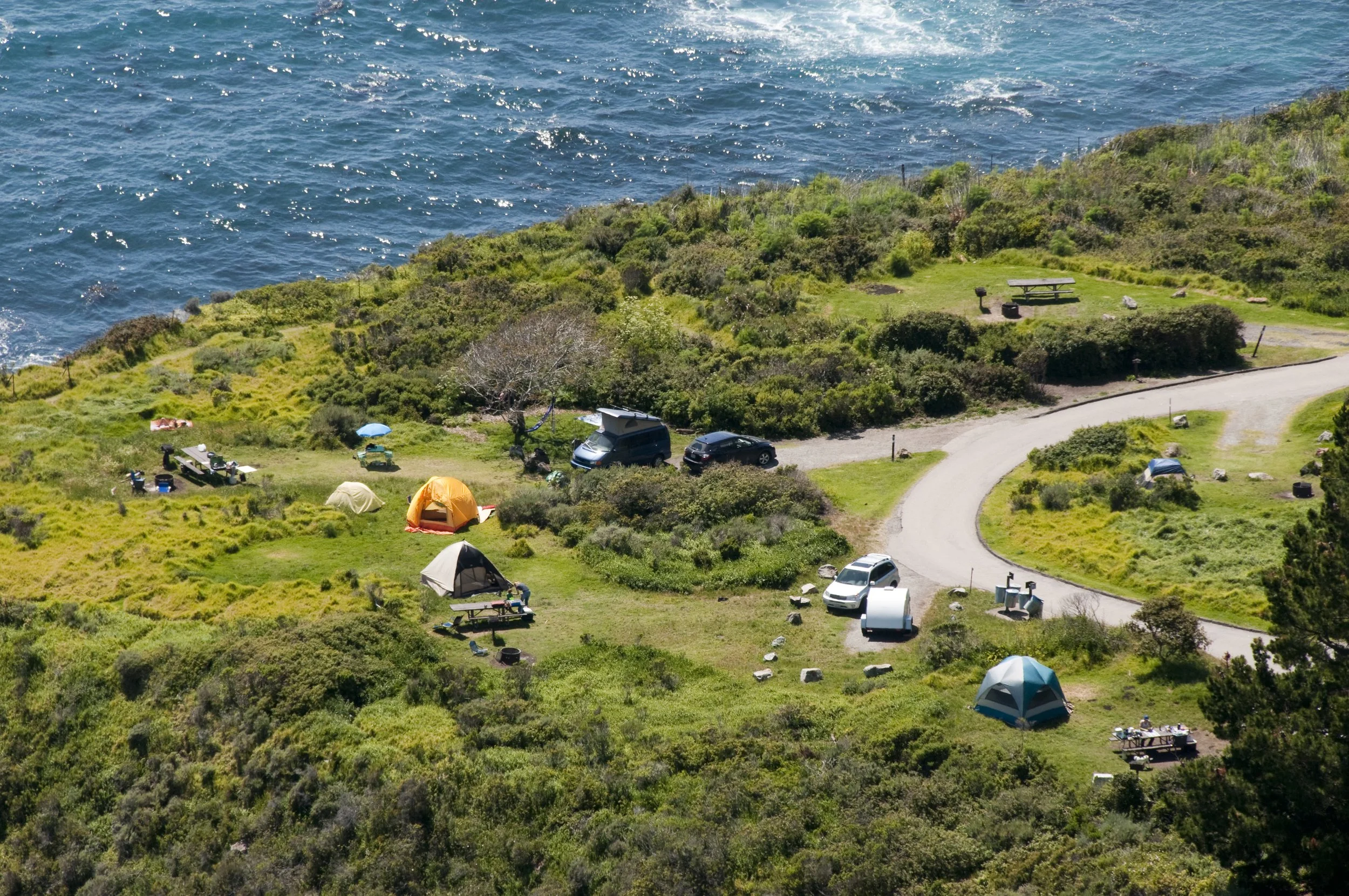
You're a guest in wildlife habitat — that's the best thing about camping here, and it comes with one rule that matters more than all the others: never feed wildlife, on purpose or by accident. An animal that learns to find food at campsites usually ends up dead. Keep every scented item — food, trash, coolers, toiletries — secured in a vehicle, bear box, or wildlife-resistant container whenever you're not using it.
Know your neighbors
-

Raccoons
Kirk Creek & Arroyo Seco: bold, clever, and active at night. An unattended cooler is an open invitation; latch everything before dark.
-

Squirrels
Paradise & the Santa Ynez sites: don't leave food on picnic tables, and never hand-feed them, no matter how politely they ask.
-

Black bears
Wheeler Gorge & the Mt. Pinos high country: less frequent, higher stakes. Use bear boxes where provided; report any bear sighting to your camp host right away. We post current bear activity notices at camp within 24 hours of a confirmed sighting.
-

Rattlesnakes
All inland areas, warmest months: watch where you step and reach, keep pets leashed, and give any snake a wide berth. They want nothing to do with you.
Around camp
✦ Rodents can carry hantavirus and plague. Don't touch rodents or droppings, keep food sealed, and tell staff if you find droppings in a facility we'll handle cleanup safely.
✦ Rivers and lakes: water levels on the Santa Ynez can change quickly during dam releases obey posted closures. Never dump wash water, soap, or fish waste in streams or at spigots.
✦ Report wildlife concerns to your camp host, or scan the QR code posted at the kiosk to reach us instantly.
Firewood & Invasive Species
Don't move firewood. It's the single most important thing you can do to protect this forest.
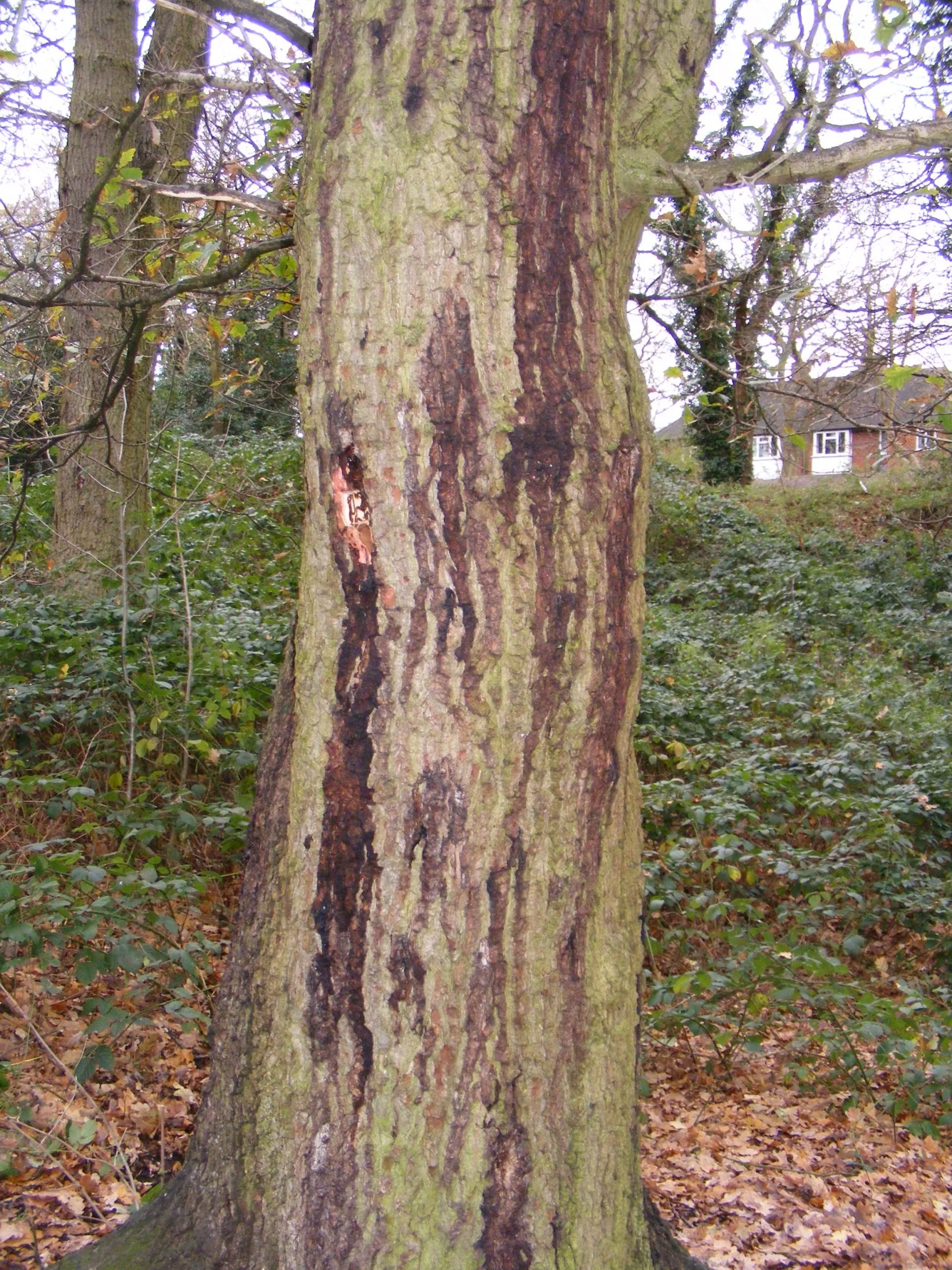
Firewood can carry invasive insects you can't see most critically the goldspotted oak borer (GSOB), a beetle that has already killed tens of thousands of oaks in Southern California. It spreads almost entirely by hitching rides in firewood. Once it reaches a new stand of oaks, there is no cure the trees die. The oaks shading your campsite are exactly what's at risk
The rules
✦ Buy your firewood where you burn it. We sell certified local firewood at every hosted campground — the easiest way to comply.
✦ Bringing your own? It must be local, with a receipt or bill of sale from a certified local vendor. Staff check firewood at check-in.
✦ Uncertified oak firewood will be confiscated at check-in and cannot be returned. It's sealed, quarantined, and destroyed under Forest Service direction that's how seriously this is taken.
✦ Kiln-dried or certified heat-treated packaged firewood from a store is fine — keep the packaging or receipt.
Firewood questions
-
GSOB attacks oaks, and California's infestations trace back to moved oak firewood. Other pests travel in other species, which is why local-only is the rule for all firewood — but oak gets the strictest handling.
-
Purchased in the same county or region as the campground, from a certified vendor, with a receipt. When in doubt, just buy from us at camp.
-
It's bagged, sealed, and stored in pest-proof containers, then destroyed by an approved method in coordination with the Forest Service. It is not burned at camp and cannot be given back.
-
Keep receipts until check-in. If staff can't verify the source of wood on hand, it's treated as uncertified.
Accessibility
Everyone belongs in the forest. We maintain accessible campsites, restrooms, and routes across our sites, and we're working to make access information accurate and easy to find for every location.
✦ Every site page on this website lists its ADA features — accessible campsites, restrooms, parking, and routes — so you can check before you book.
✦ Recreation.gov listings identify accessible campsites; these can be reserved by visitors who need them.
✦ Holders of the America the Beautiful Access Pass receive 50% off the base fee for a single family campsite. See Fees & Passes for details.
✦ Trails and routes we maintain are kept to accessibility clearance standards; conditions in a natural forest setting vary — call us before your trip and we'll give you an honest picture of any site's current conditions.
✦ This website is built to WCAG 2.1 AA and Section 508 standards. If anything here doesn't work with your assistive technology, contact us and we'll fix it — and get you the information another way in the meantime.
Frequently Asked Questions
Find clear answers to the most common questions about our services, policies, and processes. If you don’t see what you’re looking for, feel free to contact us directly.
-
Some campgrounds are reservable on Recreation.gov; others are first-come, first-served. Each site page tells you which. Reservable sites may have booking cutoff dates — after the cutoff, remaining sites become first-come, first-served.
-
Scan and Pay via the QR code posted on site, an automated fee machine where installed, or cash at staffed kiosks. Details on the Fees & Passes page.
-
Check-in 3:00 PM, check-out 12:00 PM. Staying past noon may mean additional fees.
-
In designated fire rings only, and only when fire restrictions permit. Restrictions change with conditions — check Current Conditions before your trip and posted notices when you arrive.
-
Yes, on leash, attended, and cleaned up after — at every site. Some trails have additional Forest Service pet restrictions; check the site page.
-
Only if it can't be heard beyond your campsite — which in practice rules out most generators. Quiet hours (10 PM–6 AM) are absolute.
-
Mostly no. Many of our sites — including Pfeiffer Beach, Kirk Creek, Wheeler Gorge, Reyes Creek, and Cerro Alto — have no reliable cell coverage. Download maps and confirmations before you leave pavement.
-
Varies by site — check the site page. Where water isn't available (like Pfeiffer Beach), bring your own.
-
Senior and Access passes get 50% off the base fee for a single family campsite. Interagency passes are not accepted for day-use fees at these sites, and posted fees apply on federal fee-free days. Our $50 Annual Day-Use Pass covers day-use parking at all the sites we operate — see Fees & Passes.
-
Organized events and commercial activities require prior authorization — contact us and we'll point you in the right direction.
-
Call or email us — see Contact. For reservation changes, cancellations, and refunds, contact Recreation.gov directly at 1-877-444-6777.